
Smarter CRM and Sales Strategies with ERP for Sales Force Automation
Introduction
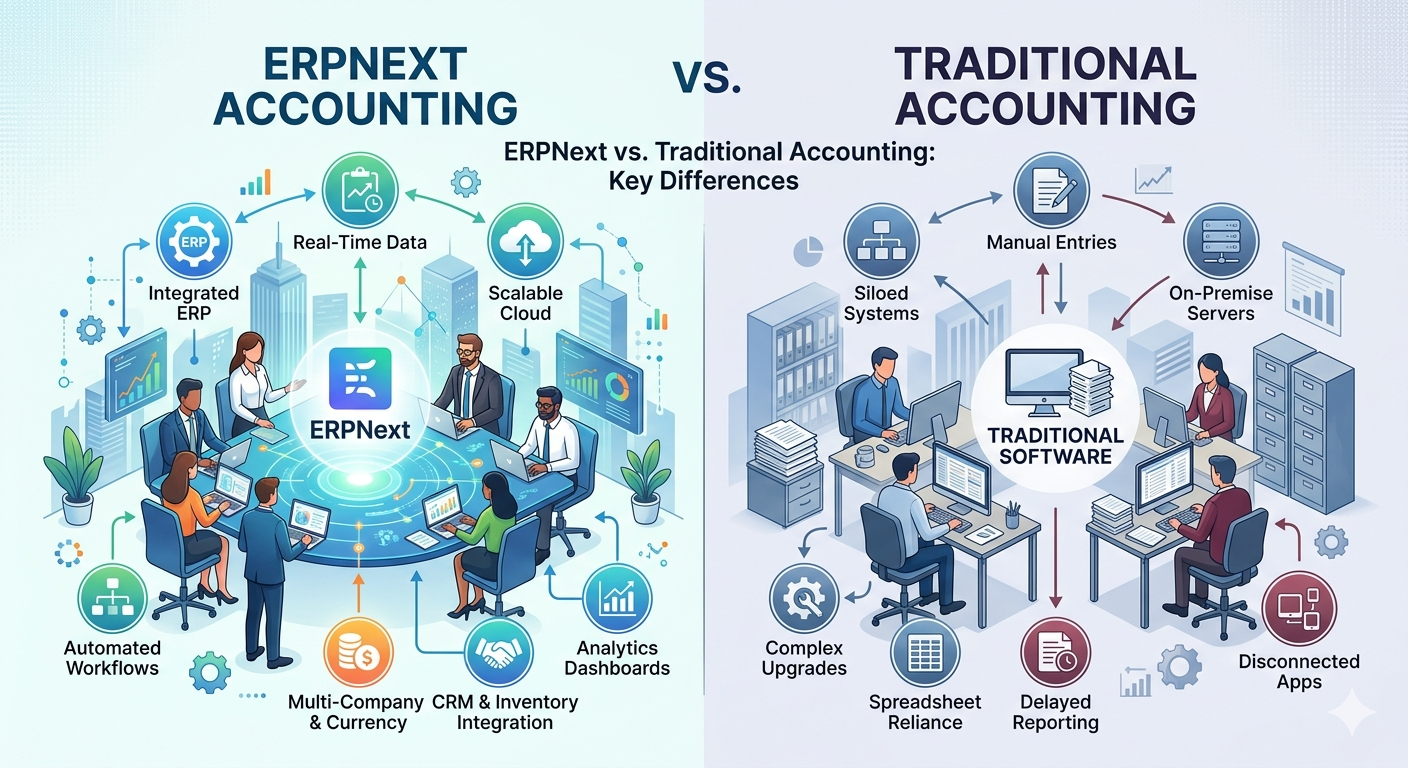
In today’s competitive market, managing sales manually can slow down growth and lead to missed opportunities. This is where ERPNext for manufacturing industry becomes a powerful solution by combining CRM, sales force automation, and manufacturing operations in one system.
Modern manufacturers need more than spreadsheets and basic tools. They need a connected system that improves lead tracking, customer management, and sales performance while staying aligned with production and inventory.
In this blog, we will explore how ERPNext helps businesses build smarter CRM and sales strategies through automation and real-time insights.
What is CRM and Sales Force Automation in ERPNext?
Simple definition
CRM in ERPNext helps manage customer relationships, while sales force automation streamlines the entire sales process.
How it works
It connects leads, opportunities, quotations, and orders into one flow. This reduces manual work and improves sales team efficiency.
Why Manufacturing Companies Need Smarter Sales Systems
Short points
Slow lead tracking affects conversions
Manual follow-ups lead to lost opportunities
No visibility between sales and production
Detailed explanation
Manufacturing businesses often struggle when sales data is disconnected from production and inventory. Without real-time updates, teams cannot accurately promise delivery timelines or manage customer expectations.
ERPNext for Manufacturing Industry: CRM Integration Benefits
Centralized customer data
ERPNext stores all customer information in one place, making it easy for sales teams to access history and interactions.
Better lead management
Every lead is tracked from inquiry to conversion, ensuring no opportunity is missed.
Improved coordination
Sales, production, and inventory teams stay connected, reducing communication gaps.
Manufacturing ERP Software Improves Sales Efficiency
Faster quotation process
Sales teams can generate accurate quotations based on real-time inventory and pricing.
Automated workflows
Follow-ups, approvals, and order processing are automated to reduce delays.
Higher conversion rates
Better visibility helps sales teams close deals faster and more effectively.
ERP Software for Manufacturers: Connecting Sales and Production
Real-time production visibility
Sales teams can check production status before confirming delivery dates.
Better planning
ERPNext production planning helps align sales targets with manufacturing capacity.
Reduced customer delays
Accurate scheduling improves on-time delivery performance.
Manufacturing Business Automation in Sales Process
Lead-to-order automation
From inquiry to order creation, ERPNext automates the entire sales pipeline.
Smart notifications
Teams receive alerts for follow-ups, approvals, and pending actions.
Reduced manual workload
Sales teams focus more on selling instead of administrative tasks.
Smart Manufacturing Software for Sales Growth
ERPNext acts as a smart manufacturing software by linking sales data with factory operations.
Demand forecasting
Sales trends help predict production requirements.
Inventory alignment
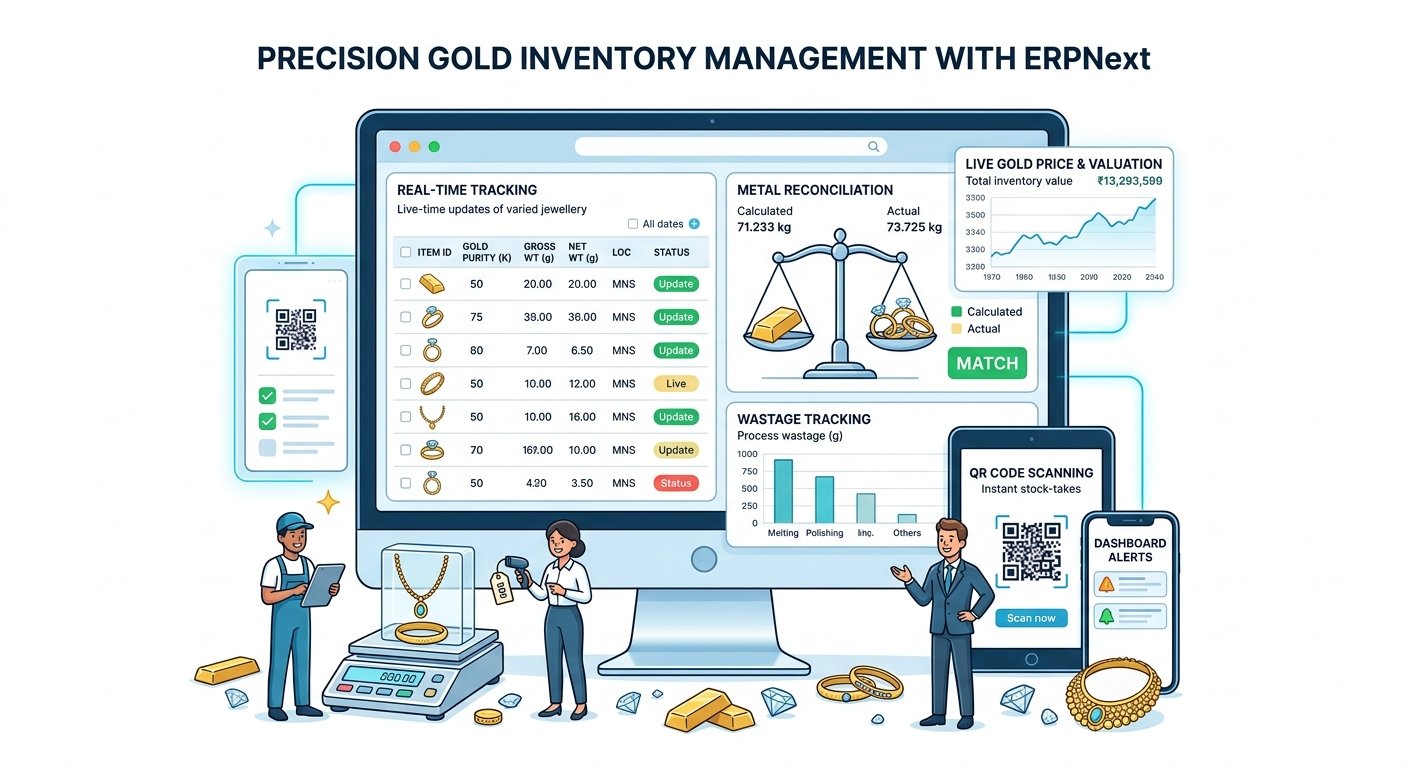
Manufacturing inventory tracking ensures stock availability before sales commitments.
Better decision-making
Managers get real-time dashboards for sales performance analysis.
Factory Management Software Supporting Sales Teams
Unified system
Sales and factory operations work on the same platform.
Real-time updates
Any change in production or stock is instantly reflected in sales data.
Improved communication
Reduces dependency on emails and manual updates.
Manufacturing Process Management for Sales Accuracy
End-to-end visibility
Sales teams can track order status from production to delivery.
Reduced errors
No mismatch between promised and actual delivery timelines.
Better customer satisfaction
Accurate updates improve trust and long-term relationships.
ERPNext Production Planning Supports Sales Strategy
Demand-based planning
Production is aligned with real sales demand.
Efficient resource use
Helps avoid overproduction or stock shortages.
Improved forecasting
Better alignment between sales data and production planning.
Manufacturing Inventory Tracking for Sales Optimization
Real-time stock updates
Sales teams always know product availability.
Prevents over-selling
Avoids committing orders without available inventory.
Faster order processing
Inventory visibility speeds up order confirmation.
Raw Material Management Software for Better Sales Planning
Cost accuracy
Sales pricing becomes more accurate with updated raw material costs.
Better profit margins
Helps avoid losses due to incorrect cost estimation.
Stronger supply chain control
Ensures materials are available to fulfill sales orders on time.
FAQs
1. How does ERPNext improve sales force automation in manufacturing?
ERPNext automates lead tracking, quotations, and order processing, reducing manual work and improving sales speed.
2. Can ERPNext connect sales with production?
Yes, ERPNext links sales data with production planning for better delivery accuracy and coordination.
3. Is ERPNext suitable for small manufacturing businesses?
Yes, it is scalable and works well for small to mid-sized manufacturers looking to automate sales and operations.
4. How does ERPNext help improve customer relationships?
It provides complete customer history, real-time updates, and faster response times through CRM integration.
5. Does ERPNext improve sales forecasting?
Yes, ERPNext uses real-time data from sales and inventory to improve forecasting accuracy.
Conclusion & CTA
Modern manufacturing businesses cannot rely on disconnected sales systems anymore. With ERPNext for manufacturing industry, companies can integrate CRM, sales automation, production, and inventory into one powerful system.
This improves efficiency, reduces delays, and helps businesses grow with better customer relationships and smarter decision-making.














Write a comment ...